
Monday, April 17, 2017
test post
UIDC - Urban International Design Contest - Is open for interest and registration. Read more here: www.facebook.com/UIDC2017


Tuesday, February 25, 2014
Students working with INIST on a business case for ATN
Today I just had an interesting conversation with students at Presidio University in San Francisco. The students are working on a business plan on how to finance and operate an ATN system. For those of you who don't know about Presidio School, See image:
 |
| Presidio School of Business |
The students are working together with INIST, International Institute of Sustainable Transportation, with Ron Swenson as mentor. We expect their very interesting work to be available for the general public this summer and I very much look forward to this.
Monday, December 2, 2013
Silicon Valley moving on and those who make it happen
As usual, many of the things that changes our world start in Silicon Valley. Today the Podcar/ATN community experiences a dramatic increase of interest from universities and cities in The Valley. Under leadership from Ron Swenson of INIST, seven cities and three universities now collaborate in moving the technology and good use of sustainable transportation forward. Today almost hundred people - including sixty students - asks themselves how we can make a better way of getting around in the 21st century using renewable energy. These people have started to organize themselves - cities starts forming an interim board and first charter, universities collaborates between the states and international borders, and not least - the main businesses are catching on. The outlook into 2014 is getting promising and exciting. I present just a few of the many that want to make a change here and now.

Hans Larsen, Transportation Manager City of San Jose. One of the many leaders involved in the work for a better transportation solution.

Burford Furman, professor at San Jose State University.

Donna Maurillo, Communications and Special Projects Director, Mineta Transportation Institute.
 Mayor Tony Spitaleri, City of Sunnyvale, California
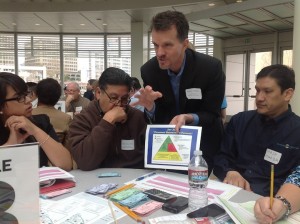
Hans Larsen, Transportation Manager City of San Jose. One of the many leaders involved in the work for a better transportation solution.
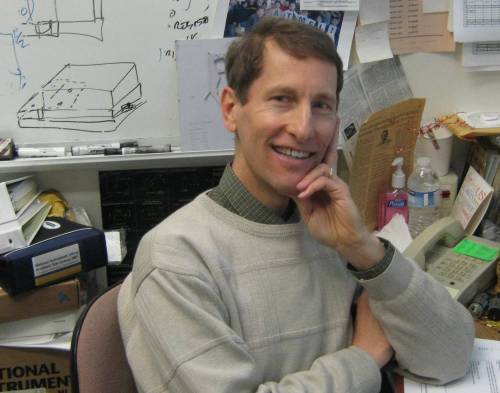
Burford Furman, professor at San Jose State University.

Donna Maurillo, Communications and Special Projects Director, Mineta Transportation Institute.

Monday, August 12, 2013
Democracy, Equality and Mobility
To travel is not for everyone. For some, it's because they don't want to. However for most people travel is essential in their everyday life, but some can't. This is for many different reasons - age, financial, health or other disability. Some people are not even allowed to travel due to political reasons.

Over the years I have been confronted with some opposition to automated transit networks with the argument "it will just add to the current traffic issues". Well, I think it is to some extent true. Or, to be more precise, I still think that an ATN system will reduce the load of other systems, cars or public. However, I do agree that it will actually add the total numbers of travel. This is due to the fact that ATN systems treats people more equal than other modes of transit. You don't need a timetable, driving license or special equipment to use a wheel chair in the Podcar. So for a lot of people who had issues traveling before, it is now considerably easier to move around. So yes, it will add to the current traffic, and that is a pretty good thing, not to forget to mention that it's the law in USA:
http://www.ada.gov/
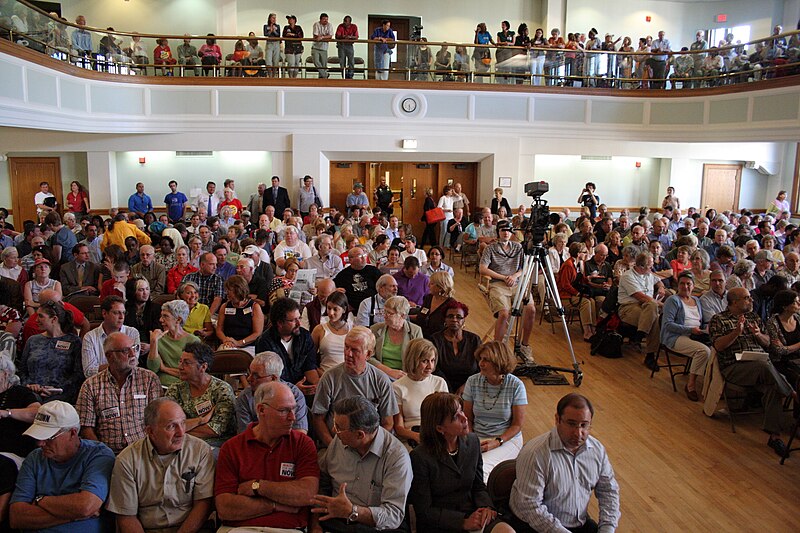
Mobility is also about democracy and political influence. If you can't get to where decisions are made, you likely will not be heard either. This mostly affects those that have disabilities, no driving license or can't afford a car. Yes, you can go to a local meeting on a bus or light rail. But will it take you back home if the meeting goes on for a long time into late evening? Unfortunately not. So, you have to say "bye" way before the end of the meeting to catch your ride home and you are at risk not to be included in last minute decisions and forward planning. An ATN system can, like no other public transit technology, adapt to personal needs and give full service regardless of time of day, financial status or physical disability.

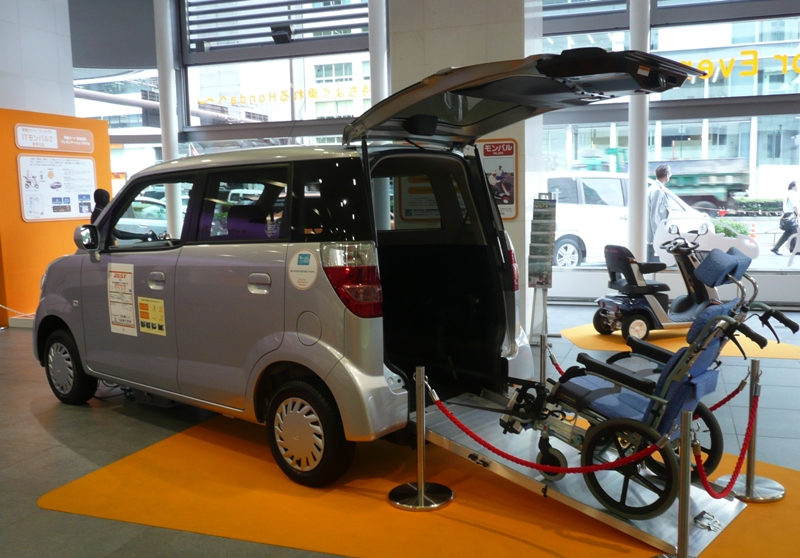
Over the years I have been confronted with some opposition to automated transit networks with the argument "it will just add to the current traffic issues". Well, I think it is to some extent true. Or, to be more precise, I still think that an ATN system will reduce the load of other systems, cars or public. However, I do agree that it will actually add the total numbers of travel. This is due to the fact that ATN systems treats people more equal than other modes of transit. You don't need a timetable, driving license or special equipment to use a wheel chair in the Podcar. So for a lot of people who had issues traveling before, it is now considerably easier to move around. So yes, it will add to the current traffic, and that is a pretty good thing, not to forget to mention that it's the law in USA:
http://www.ada.gov/
Mobility is also about democracy and political influence. If you can't get to where decisions are made, you likely will not be heard either. This mostly affects those that have disabilities, no driving license or can't afford a car. Yes, you can go to a local meeting on a bus or light rail. But will it take you back home if the meeting goes on for a long time into late evening? Unfortunately not. So, you have to say "bye" way before the end of the meeting to catch your ride home and you are at risk not to be included in last minute decisions and forward planning. An ATN system can, like no other public transit technology, adapt to personal needs and give full service regardless of time of day, financial status or physical disability.
Friday, June 21, 2013
Innovation and Incremental development
If you raise your view from the ground and look at transportation from above you will observe a few things. First, it's a steady flow of objects carrying people and goods constantly burning fossil fuels to move. Second, the patterns of flow is very similar to that of small water creeks turning into small rivers turning into a big massive flood of water.

Now, let's reverse the view and be a part of this flow. We are going from one place to another, either chained to the steering wheel and trying to find a way to get rid of our car when we arrive at our destination - or using public transit and trying to match timetables and routes in a way that does not mess up our precious time too much.
In this context I raise the issue again - Real Innovation in transportation can not come from within the existing modes. Anything that does that will always be limited to the current paradigm and can never break out of the box it´s put in.

Close you eyes and imagine a six lane congested freeway. Put in a little "innovation", let's say they are all now electric vehicles. Any difference? Not really. Let's add some more - imagine all of them being automatic driven by computers? It will still look the same, but maybe the people trapped in those cars at least can use their time working with their laptop or something. I don't object to electric self driving cars at all, I think it's great that this evolution is happening. But it is incremental development within the current paradigm of city development - same roads, same parking issues, almost same accident problems, still congested roads and not least - a lof of energy misused for personal transportation.
The possibilities of solar powered Automated Transit Networks is far beyond the limitations of current technologies. We can get around way safer, faster, comfortable, greener and use land for what is should be used for - humans, not machines. I am going to Los Angeles at the end of June to meet with people looking into just that at a gathering hosted by Aerospace Corporation, the Mineta Transportation Institute and City of San Jose. An update will come soon at this blog.


Now, let's reverse the view and be a part of this flow. We are going from one place to another, either chained to the steering wheel and trying to find a way to get rid of our car when we arrive at our destination - or using public transit and trying to match timetables and routes in a way that does not mess up our precious time too much.
In this context I raise the issue again - Real Innovation in transportation can not come from within the existing modes. Anything that does that will always be limited to the current paradigm and can never break out of the box it´s put in.

Close you eyes and imagine a six lane congested freeway. Put in a little "innovation", let's say they are all now electric vehicles. Any difference? Not really. Let's add some more - imagine all of them being automatic driven by computers? It will still look the same, but maybe the people trapped in those cars at least can use their time working with their laptop or something. I don't object to electric self driving cars at all, I think it's great that this evolution is happening. But it is incremental development within the current paradigm of city development - same roads, same parking issues, almost same accident problems, still congested roads and not least - a lof of energy misused for personal transportation.
The possibilities of solar powered Automated Transit Networks is far beyond the limitations of current technologies. We can get around way safer, faster, comfortable, greener and use land for what is should be used for - humans, not machines. I am going to Los Angeles at the end of June to meet with people looking into just that at a gathering hosted by Aerospace Corporation, the Mineta Transportation Institute and City of San Jose. An update will come soon at this blog.

Wednesday, April 24, 2013
The importance of continuity
Today I had a short visit with people at Capitol Hill to talk about the upcoming conference in Washington DC in October. For both US and European decision makers the issue of unemployment is high on the list of important tasks to address, something that ties closely into what we do at the conference and in the ATN/Podcar community. We want a lot of young people to be engaged in building their own sustainable future as infrastructure projects take a long time. Continuity is a major challenge in our work. Politicians and decision makers change, and so do we. By having a large contingent of students and backing organizations behind them we can create a strong flow of information that carries experiences and work from today into the new realities of tomorrow. So, the next item on my personal agenda is to invite motivated students to the conference and make sure we propagate the good work of the students and supporters we have today to a larger audience at the October conference. in DC.

A short other note - I was invited as a panelist and speaker for the ASES Conference in Baltimore last week. It was refreshing to see a larger audience than expected and also that the possibilities of solar energy and Podcar technology was well recieved. I look forward to continue in talks with ASES on this subject as I believe that we can support each other well.

Longworth House, Washington DC
A short other note - I was invited as a panelist and speaker for the ASES Conference in Baltimore last week. It was refreshing to see a larger audience than expected and also that the possibilities of solar energy and Podcar technology was well recieved. I look forward to continue in talks with ASES on this subject as I believe that we can support each other well.
Saturday, March 16, 2013
The Solar Component
I sometimes get the question "Why solar?" for Podcar systems. Well, there are many reasons for it. First, the sun is the most natural source of energy on earth, and it's endless free energy. Second, the electric energy derevied by PV cells is very suitable for transportation as electric motors are highly efficient. Third, we move with almost exactly the same pace as the sun shows itself - we sleep in the night and travel during the day. All of these good reasons add up to a solution that outperforms all non-renewable sources of energy for transportation. To furthermore add to the good news, todays cost for PV is more competitive than ever, and to install a PV system for a podcar network is also a sound financial investment.

"But, how can you travel when there is no sun?"
We just use the other sources of storage - hydro and wind. Since the travel patterns are much less intense during the night we need much less than during the day. For this day and time, solar energy as primary source of energy for transportation is not only a great idea, it's a very feasible and economical solution. On March 27 I will travel to the European Investment Bank to present the Uppsala preliinary ELENA application. The key component for the Podcar network proposed in Uppsals is the solar canopy over the track, feeding the system with 100% energy. It's amazing that less than 100 years after the break-through of the car that we now can seriously approach a solar based transportation system that performs better than the car. Human innovation and entrepreneurship that led us here is impressive, and it's the effort of many, many people that has made this possible. I really feel their strength and appreciation in my work, and it's an honor to carry these ideas forward.
Lastly, one example of many of the change solar energy can bring to people: The Barefootcollege

"But, how can you travel when there is no sun?"
We just use the other sources of storage - hydro and wind. Since the travel patterns are much less intense during the night we need much less than during the day. For this day and time, solar energy as primary source of energy for transportation is not only a great idea, it's a very feasible and economical solution. On March 27 I will travel to the European Investment Bank to present the Uppsala preliinary ELENA application. The key component for the Podcar network proposed in Uppsals is the solar canopy over the track, feeding the system with 100% energy. It's amazing that less than 100 years after the break-through of the car that we now can seriously approach a solar based transportation system that performs better than the car. Human innovation and entrepreneurship that led us here is impressive, and it's the effort of many, many people that has made this possible. I really feel their strength and appreciation in my work, and it's an honor to carry these ideas forward.
Lastly, one example of many of the change solar energy can bring to people: The Barefootcollege
Tuesday, January 8, 2013
New year, new energy and new people.
The World of Sustainable Transportation is stronger than ever. Since last year we have seen a dramatic growth in interest from Universities in all over the world. It's amazing. Here are selected bits from last year's happenings:
Sweden
The University of Linkoping recently finished a study of how to find the best route forward in getting financing for the GTS Foundation. http://www.gtsfoundation.se/english/
Ångström Laboratories, a part of the Uppsala University, now have seven students under the leadership of grad student Hanna Jansson in researching possibilities and challenges of solar as main energy source for the planned Uppsala Podcar System. http://www.asc.angstrom.uu.se/en/
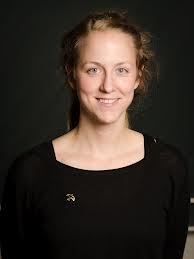 Hanna Jansson
Lund University and the LUMES program student Aurora Lindström (yes, my daughter), were instrumental in structuring the Solar Skyways Challenge for San Jose University together with Professor Burford Furman.
http://www.lumes.lu.se/
USA
The San Jose State University has launched the Solar Skyways Challenge, an impressive incentive to win the $10,000 prize to best team presentation of a high quality study in making a solar podcar system. The team has its own homepage: http://www.engr.sjsu.edu/smssv/team.html

The challenge is also one of the KATERVA nominees:
http://katerva.org/2012-nominees/solar-skyways/
UK
Professor Paul Newman of Oxford University is looking into the Robotics aspect of the ULTra system at Heathrow Airport. This work is essential for understanding of the control systems and human-machine interface.
http://www.robots.ox.ac.uk/~mobile/wikisite/pmwiki/pmwiki.php?n=People.PMN
China
A "Personal Rapid Chair" video was recently posted on Youtube. It was developed by Hu Yingping at North China University of Technology:
This is just a very short list. The interest and understanding of the need for something better
than current transportation modes is getting really strong. I am sure we will have a very
exciting 2013.
Wednesday, August 29, 2012
Time to meet!
In a few weeks the core of people involved in promoting, discussing and analysing Podcar technology will meet in Berlin in conjunction with Innotrans 2012. Our meetings are held September 19-20 at the Technical University in Berlin, with speakers from Germany, UK, Sweden, Italy, Netherlands, USA and more.

Last years conference in Stockholm was a great event, and from what we see now, we will be almost a hundred people in Berlin! Fantastic. As the icecaps melt, the price of oil rises and the cities becomes even more congested than before, the work people do to try and find better solutions for energy use, transportation and land development is more important than ever. I look forward to meet again, with new people from around the world attending. A special welcome to students in Sweden, USA, Netherlands and Germany that are keen on understanding the Podcar concept and carry it forward to new ideas and implementations.
For registration, go to The Conference Homepage

Last years conference in Stockholm was a great event, and from what we see now, we will be almost a hundred people in Berlin! Fantastic. As the icecaps melt, the price of oil rises and the cities becomes even more congested than before, the work people do to try and find better solutions for energy use, transportation and land development is more important than ever. I look forward to meet again, with new people from around the world attending. A special welcome to students in Sweden, USA, Netherlands and Germany that are keen on understanding the Podcar concept and carry it forward to new ideas and implementations.
For registration, go to The Conference Homepage
Sunday, June 3, 2012
Dear Ms Hatt - What are you thinking?
Ms Anna Karin Hatt is a member of the same party as me - the Center party of Sweden. I have heard her in several debates over the year, and since she became minister of energy in Sweden I had hopes for more solar and less fossil fuels in government strategies. So what is Anna Karin thinking on these issues? A short excerpt from a question in the Swedish Parliament last week that I read at Kjell Alekletts blog::
Minister Hatt: "Regardless of where we live in Sweden we are dependent on efficient transport. What is important for me and the government is to take concrete measures and continue step by step to institute the Alliance’s energy and environmental policies so that by 2030 we can already have a vehicle fleet that is independent of fossil fuels. This will advantage both the Swedish economy and employment."
So, aren't those words nice you think? Well, I am not happy at all. Ms Hatt (inadvertedly?) rules out major change in the transportation paradigm as she focuses on existing technology - i.e. cars, buses, trains etc. It is a never ending story of not being able to think out of the box - a series of ministers and elected officials follows the same path in their thought processes. Ines Uusman, a former minister of IT in Sweden (as our current Ms Hatt is) said May 1996:
Minister Uusman: "Everyone talks about the internet but it is maybe passing and later the focus will be more specific"
Minister Hatt: "Regardless of where we live in Sweden we are dependent on efficient transport. What is important for me and the government is to take concrete measures and continue step by step to institute the Alliance’s energy and environmental policies so that by 2030 we can already have a vehicle fleet that is independent of fossil fuels. This will advantage both the Swedish economy and employment."
So, aren't those words nice you think? Well, I am not happy at all. Ms Hatt (inadvertedly?) rules out major change in the transportation paradigm as she focuses on existing technology - i.e. cars, buses, trains etc. It is a never ending story of not being able to think out of the box - a series of ministers and elected officials follows the same path in their thought processes. Ines Uusman, a former minister of IT in Sweden (as our current Ms Hatt is) said May 1996:
Minister Uusman: "Everyone talks about the internet but it is maybe passing and later the focus will be more specific"
Well Ines, Internet was a slightly bigger issue than you thought. So will the future mass transportation solutions be - much less cars, much more automation than Ms Hatt realizes. And the energy is the key - we don't need almost any fossil fuels at all, let's use the sun combined with intelligent storage such as hydro and other smart technologies. An old but still very valid video:
Monday, May 28, 2012
Germany offsets 20 Nuclear power plants by solar - but where is the press coverage?
Yesterday I read wonderful news from Germany. They just set a world record in Solar energy and were able to offset 20 nuclear reactors in two days by the combined output of solar power in the country. Way to go. But were are the headlines? I scanned Swedish and US mainstream media...nothing. The news came to me through this link but I find nothing at CNN, MSNBC, USAToday, Expressen, Dagens Nyheter - all major media players in Swedish national and US international. Weird. Russian Pravda is covering it, and few sites in Europe plus Reuters. That's it. I think people should be dancing and make the same amount of happy crazy noise as when their local sports team wins a major tournament. Well, as I wait for such things to happen I will instead be glad that we chose Berlin as the next place to promote Podcars and solar transportation for Podcar City 6 Conference
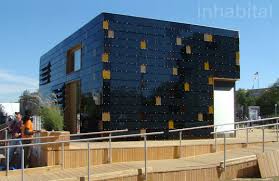
Image: Inhabitat.com

Image: http://info.cimetrix.com/blog/bid/31798/Windmills-solar-panels-and-the-effect-of-feed-in-tariffs
Image: Inhabitat.com
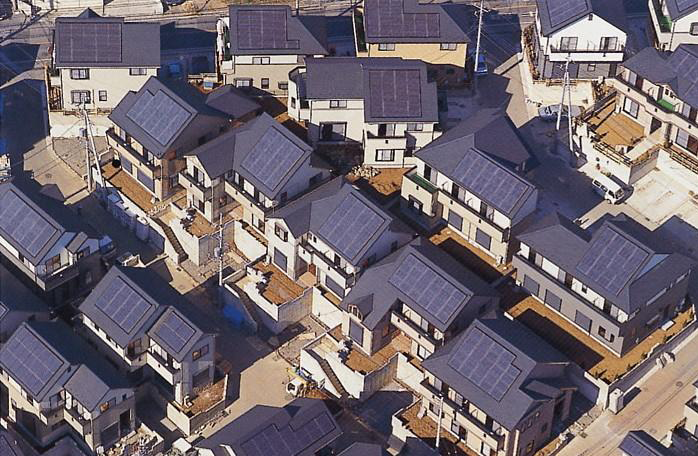
Image: http://info.cimetrix.com/blog/bid/31798/Windmills-solar-panels-and-the-effect-of-feed-in-tariffs
Tuesday, May 22, 2012
The Facebook Factor, Scientology, and a Piece of the Blue Sky
An enormous amount of people not only uses Facebook, but also believes that it is actually a tangible and valuable asset, solid enough to value it at 100 times its annual profit. It reminds me of Scientology - inflate x 100,000 the low count of people actually really interested enough to pay for the "Teachings" (Scientology) / "Coolness" (Facebook), then sell it to a few celebrities (Scientology) / Mutual Funds (Facebook) that have the resources to pay for the inflated value and hope that enough common people are stupid enough to buy a Piece of the Blue Sky. In the case of Scientology that did not work so well, but Facebook, well, you guys are good.
In my work with a very tangible, yet still to some degree questionable new technology called ATN or Podcars, I am even happier today that I am able to see real value measurable in travel times, construction costs, low emissions and almost no accidents per passenger miles at all. I wish there were more energy put into real issues such as dysfunctional transportation systems - Imagine what hundreds of billions could do to a sustainable solar transportation system free of CO2!. I am the eternal optimist and believe that real care of the world we live in will eventually take precedent over yuppie wannabe billionaires and that the coolest thing in Silicon Valley is actually to change the world and not the car you put on the corporate parking lot at Google/Facebook/Apple (take your pick).

Image: The Dying Dandy by Dardel. Wikipedia: Dardel
In my work with a very tangible, yet still to some degree questionable new technology called ATN or Podcars, I am even happier today that I am able to see real value measurable in travel times, construction costs, low emissions and almost no accidents per passenger miles at all. I wish there were more energy put into real issues such as dysfunctional transportation systems - Imagine what hundreds of billions could do to a sustainable solar transportation system free of CO2!. I am the eternal optimist and believe that real care of the world we live in will eventually take precedent over yuppie wannabe billionaires and that the coolest thing in Silicon Valley is actually to change the world and not the car you put on the corporate parking lot at Google/Facebook/Apple (take your pick).

Image: The Dying Dandy by Dardel. Wikipedia: Dardel
Friday, May 18, 2012
Elevated rails and visual intrusion
In Las Vegas for two days I have been studying the effects of elevated rails carefully. The LV Monorail is a good study object as it has many different heights, presence in different types of areas and surroundings, split and joined tracks and much more. A few early observations: The stations seems to be over sized. The can easily hold many more times the people actually using the system (about 10-15,000 a day). The system is heavy but surprisingly slim looking from an angle below. No effort seems to been done into making the pillars and infrastructure blend into the surroundings - it's all light grey concrete. Neither did I see any effort to design the track into an object by itself, i.e. enhancing the system by making a visual statement (for example, painting it all green or putting in lights along the track). The ride is not uncomfortable, but still a bit rough. The trains looks nice, and are almost completely silent. Standing down below in traffic you hear nothing. With no traffic, the noise is almost undetectable. The cost for the system is high, according to Wikipedia about 400 million USD in construction (2004 cost). With a length of 3,8 miles / 6,3 km this translates into more than 100 MUSD per mile, probably more expensive than a light rail would cost. I find it strange that the connection to the airport is not done, that would probably make the whole system way more feasible - but I assume that would also make all taxi companies upset, a lot of them make good $$ going from the airport to downtown and hotels.
Image courtesy of :Tripadvisor

In whole an interesting experience. I would like to see what an ATN system could do instead, with a larger network and connection to the airport and a loop around the area with possibly a 20-30 mile length and small stations directly inside the hotels. My guess is that with a more developed ATN system using solar (perfect in LV) the city could be way more sustainable and probably be able to convert a lot of parking into more hotels and exciting entertainment facilities.
Official Homepage: LV Monorail
A critical article about the project: Lightrail now
Image courtesy of :Tripadvisor

In whole an interesting experience. I would like to see what an ATN system could do instead, with a larger network and connection to the airport and a loop around the area with possibly a 20-30 mile length and small stations directly inside the hotels. My guess is that with a more developed ATN system using solar (perfect in LV) the city could be way more sustainable and probably be able to convert a lot of parking into more hotels and exciting entertainment facilities.
Official Homepage: LV Monorail
A critical article about the project: Lightrail now
Monday, May 14, 2012
Another Congested Day in Silicon Valley
I have had the opportunity to travel many times to the Bay Area in California, and experience the Silicon Valley culture. From my tiny perspective of getting around in a more intelligent way it strikes me over and over again how such a supposedly intelligent set of people in this place are so extremely ineffective in planning for a smarter transportation system. The VTA light rail is underutilized, the roads are congested. There are very few spaces for pedestrians and bicycles, and a lot of spaces for parking. All you Apple/Google/Yahoo/Facebook "geniuses", what about cleaning up your local act? You guys have the resources, brains and stamina to endure a dramatic change into a much better transit system and smarter world. Good article about the problems from the : SF Chronicle
Wednesday, May 9, 2012
Urban Sim gets part of $10 million NSF grant
For some time I have been following a similar system to our own OpenSim based Encitra immersive simulation tool. The Urban Sim developed at UC Berkely is a very promising technology and to my joy they received a major grant recently together with some other projects for massive data gathering. This could simplify our own work as we can collaborate with this technology in a near future and and use their modeling for our own much more detailed and advanced simulations. I am on my way to California this weekend and look forward to learn more.
I am also curious how the Carbon War room team will handle the strategical issues regarding tools for CO2 reduction. Their focus has so far been very much on the physical application and incremental change, less on models and scenarios where new technology in transportation and energy production changes how we get around dramatically. Their good work is commendable but should maybe also look more into game changing issues. I hope the Encitra modeling platform can be used by people with good ideas to be used in a near future for such scenarios and visualizations of how things could be.
I am also curious how the Carbon War room team will handle the strategical issues regarding tools for CO2 reduction. Their focus has so far been very much on the physical application and incremental change, less on models and scenarios where new technology in transportation and energy production changes how we get around dramatically. Their good work is commendable but should maybe also look more into game changing issues. I hope the Encitra modeling platform can be used by people with good ideas to be used in a near future for such scenarios and visualizations of how things could be.
Monday, May 7, 2012
Uppsala Simulation - Phase 2 ready
Yesterday I got a link to the final version of the Uppsala Podcar Simulation. Dr. Crista Lopes and her team has made a great work and it is pretty amazing that we now have a copy of Uppsala to use for simulation of transportation, energy, pollution, real estate development and much more. Special thanks to Michael, Bengt, Ron, Orly, Charly and Kal plus the Phase 1 team of Lorraine and Anton who all made this possible. Also, our customers - City of Uppsala, the County Academic Hospital, The University Real Estate Company (Akademiska Hus) and all people involved in those organizations to give us advise and comments.
In a near future we expect to extend the model further with all remaining buildings, more movements and more accurate simulation of energy and pollution. To visually see how a city can change, and that in an immersive, real time environment is awesome and pretty effective for understanding the issues and options.
Link to Dr. Lopes explanation of this project:
http://tagide.com/blog/2012/05/simulating-a-city/
The Video of the 4D world:
A few images:


In a near future we expect to extend the model further with all remaining buildings, more movements and more accurate simulation of energy and pollution. To visually see how a city can change, and that in an immersive, real time environment is awesome and pretty effective for understanding the issues and options.
Link to Dr. Lopes explanation of this project:
http://tagide.com/blog/2012/05/simulating-a-city/
The Video of the 4D world:
A few images:


Thursday, May 3, 2012
Uppsala System in the works and news from San Jose, China and India
The last weeks has been intense - we are getting close to starting a more detailed study in Uppsala, with possible support from the EU. Also, this last week the preliminary findings of San Jose Podcar study came out. Very much as anticipated, "Interesting and possible but more tech work needed" is my conclusion of the report. We have also seen a series of new studies being started in India and China - the current two most growing economies in the world. Also, on my way back from Paris this week I noted a dramatic loss in profit for Scandinavian Airlines. Reason? Fuel prices, something that is also the most worrying factor in returning to growth for US and European economies. Solar transportation is needed more now than last week, and my bet is that fuel prices will continue to rise.
http://www.youtube.com/watch?v=l-blnAlcmOg
http://www.youtube.com/watch?v=l-blnAlcmOg
Saturday, April 7, 2012
When will the Perfect Storm come?
This week I have made preparations for the launch of Podcar.org. A large part of that is to research what is going on in the world of sustainable transportation. It is obvious that a lot of energy is going into Podcar development and interest - but also that we still have a rather long way to go before we reach critical mass. I am encouraged by news such as the continued success of the Heathrow system - http://www.reuters.com/video/2012/04/04/heathrow-moves-forward-with-pod-cars?videoId=221945131&videoChannel=2602 and even more excited when I in January read about the India project - http://www.cnngo.com/mumbai/life/pods-future-urban-transport-india-409090. These are important actions and news for us, yet still not strong enough to drive the industry forward into stronger research & development. So, when will the Perfect Storm come? My guess is that the combination of high energy prices, increased demand of efficient transportation, unsustainable congestion as the cities get more and more dense and not least the issues with Global Warming will all together reach a critical point in a near future. None of the existing modes of transportation can alone answer the call for a better and sustainable way to get around. The time for Podcar technology as a general transportation system is not now - but in a nearer future than many realizes.
Friday, March 23, 2012
New Start - 2012
It is almost four years since I started this blog - with very few updates. Since the last four years a lot has happened - Encitra is doing very exciting stuff in the Uppsala Simulation Project, The City of Uppsala is very close to starting a full study and procurement process for Podcars,

I have had the honor to assist and work through the Memorandum of Cooperation between Sweden and United States on Podcar Technology (and High Speed Rail) and much more.
Porcari and Zetterberg, Swedish US MoC Signing
From March 2012 I look forward to a more outgoing work with news about how to get away from fossil fuel in transportation, the importance of virtual modeling tools for birds-eye view of projects for sustainable change and growth and not least exciting meetings in Sweden, Germany, USA and elsewhere where people are starting to understand that we actually can completely change the way we move around - into a better, safer, efficient and not least fun world of transportation.
Link to Encitra Technology at Youtube (low res): http://www.youtube.com/watch?v=fPklr_PFn-s
Link to the Swedish-US MoC: http://www.dot.gov/ost/ogc/OST_DOT/Sweden.pdf
Link to the Swedish-US MoC: http://www.dot.gov/ost/ogc/OST_DOT/Sweden.pdf
Sunday, April 27, 2008
My dear Center Party and the Ethanol discussion
Today the official spokesman for my own Party - Claes Vasterteg at www.centerpartiet.se - defends the Ethanol industry, as he in the same time seems to support the criticism of Ethanol production and it's consequences. "Anyone fueling their car with Ethanol in Sweden does a good thing", and then states "It would be wrong giving Ethanol the entire blame for increasing food prices in the world". Mr. Vasterteg even promotes Ethanol as a good crop for hungry people in the third world! I think they would like to grow food first, dear collegue...
I am amazed that basic physics and math don't work with some people. Even one of the most positive Ethanol enthusiasts - Sekab CEO in Sweden - clearly states that Ethanol never can replace fossile fuels as primary source for transportation. A vast number of research done by independent institutes clearly states that production of Ethanol will no matter how much better the technology gets still only provide a fraction of the world wide need for inefficient cars.
The only way out of the car is promoting something better than the car. I don't know if Podcar technology is the best answer, but it will use ZERO fossil fuel and/or any other bio fuel. It seems to be safer, faster, more convienient and much more energy efficient than enything else around. To argue against evaulation of this technology makes me suspicious that Sekab and other supporting organisations are taken over by the car industry. Let's hope that I'm wrong.
I am amazed that basic physics and math don't work with some people. Even one of the most positive Ethanol enthusiasts - Sekab CEO in Sweden - clearly states that Ethanol never can replace fossile fuels as primary source for transportation. A vast number of research done by independent institutes clearly states that production of Ethanol will no matter how much better the technology gets still only provide a fraction of the world wide need for inefficient cars.
The only way out of the car is promoting something better than the car. I don't know if Podcar technology is the best answer, but it will use ZERO fossil fuel and/or any other bio fuel. It seems to be safer, faster, more convienient and much more energy efficient than enything else around. To argue against evaulation of this technology makes me suspicious that Sekab and other supporting organisations are taken over by the car industry. Let's hope that I'm wrong.
Subscribe to:
Posts (Atom)